
Unlock Seamless Connectivity: The Ultimate Setup Guide for Range Extender WN3000RPv3
Posted by WifiExtSetup on 19th June 2025
Introduction: Why Is Your WiFi Still Failing You?
Have you ever found yourself waving your phone around in search of a signal—only to give up and head closer to the router? You’re not alone. In an era where digital connection is essential, poor WiFi is more than an inconvenience—it’s a productivity killer. So, why do dead zones still exist in modern homes?
Enter the Range Extender WN3000RPv3—a compact yet powerful device that promises to eliminate blind spots and stretch your signal into every forgotten corner of your space. But how do you actually set it up right?
Let’s break it down.
Understanding the Power of WN3000RPv3
What Is the WN3000RPv3?
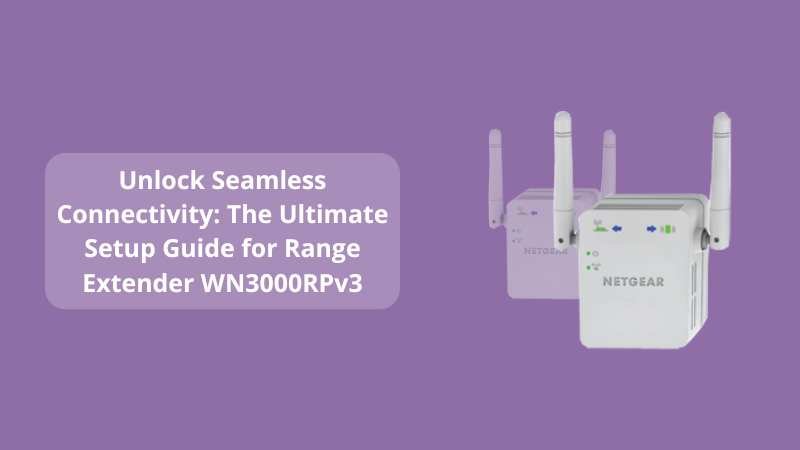
The WN3000RPv3 is a wall-plug WiFi range extender developed by Netgear. It’s designed to work with your existing router to improve WiFi coverage by repeating the wireless signal and boosting its reach.
“Think of it as a WiFi lighthouse—shining your connection into the darkest corners of your home.”
Key features include:
-
Compatibility with b/g/n 2.4GHz routers
-
External antennas for improved performance
-
Push ‘N’ Connect (WPS) functionality
-
Smart LED indicators to help with optimal placement
Step-by-Step Setup: Range Extender WN3000RPv3
1. Plug In and Power Up
Choose a central location—ideally halfway between your router and the area with weak signal. Plug your WN3000RPv3 into a wall outlet and wait for the Power LED to turn green.
Pro Tip: Avoid placing the extender in corners, cabinets, or behind electronics—open spaces work best.
2. Connect via WPS (The Easy Way)
If your router supports WPS:
-
Press the WPS button on the extender.
-
Within 2 minutes, press the WPS button on your router.
-
Wait for the Device to Router LED to turn solid green. That’s your confirmation!
Once connected, your extender will duplicate your router’s SSID with a _EXT suffix (e.g., MyWiFi_EXT).
3. Manual Setup via Web Interface
If WPS is not an option:
-
Connect your device (PC/phone) to the NETGEAR_EXT WiFi network.
-
Open a browser and go to: www.mywifiext.net
-
Follow the on-screen setup wizard to select and extend your router’s network.
-
Create an SSID and password for your extended network or mirror your existing one.
4. Find the Sweet Spot
The Signal LED indicators help:
-
Green = Strong signal
-
Amber = Moderate
-
Red = Poor connection
Move your extender around until you get a green light. This ensures your device is positioned for optimal coverage.
Common Setup Issues and Fixes
“Can’t connect to NETGEAR_EXT?”
Ensure the extender is powered on and reset it using the pinhole button if needed.
“Mywifiext.net not loading?”
This page only works when connected to the extender’s network. Check your device’s WiFi.
“Speed drop after extension?”
That’s normal with single-band extenders. Place the extender closer to the router or upgrade to a dual-band model if possible.
Optimizing the Performance Post-Setup
1. Firmware Updates
Visit Netgear Support and enter WN3000RPv3 to download the latest firmware. An updated device is a faster and more secure device.
2. Device Prioritization
Avoid streaming 4K or gaming over extended networks. Keep bandwidth-heavy devices closer to the main router.
3. Use With Mesh Systems
For larger homes, consider combining your extender with mesh systems for seamless roaming.
Why the WN3000RPv3 Still Matters in 2025
While newer models support dual-band and faster protocols, the WN3000RPv3 remains a top pick for:
-
Budget-conscious users
-
Small to medium-sized homes
-
Simple plug-and-play needs
It’s reliable, compact, and gets the job done.
“Good WiFi doesn’t have to come with a high price tag.”
Need help with setup? Visit wifi-extsetup.com for personalized assistance and detailed walkthroughs.
Also, don’t miss our blog on a similar model:
👉 Supercharge Your WiFi: The Ultimate Setup & Optimization Guide for Range Extender WN3100RP
Conclusion: So, Is the WN3000RPv3 Worth It?
If you’ve been frustrated with spotty internet in specific rooms, yes. The WN3000RPv3 may not be the flashiest extender on the market, but it delivers where it matters: reliable range, easy setup, and improved connectivity.
So, what are you waiting for? Ready to say goodbye to WiFi dead zones?
FAQs: Range Extender WN3000RPv3
Q1. Can I use WN3000RPv3 with any router?
Yes, it works with most b/g/n 2.4GHz routers.
Q2. What is the range of this extender?
Up to 100 feet indoors, depending on your home layout.
Q3. Does it support 5GHz networks?
No, it only supports 2.4GHz frequency.
Q4. How do I reset the extender?
Press and hold the reset pinhole button for 10 seconds until the power light blinks.
Q5. Is it ideal for streaming and gaming?
It works well for casual streaming and browsing, but high-speed needs are better met by dual-band or tri-band extenders.